General Discussion

Status
Not open for further replies.
Now we use Roll20 even when we play in person! Which is another thing; it's easier for friends to just not turn up and phone it in from home. Half the game was hanging out, now I'm DMing to a dude who's very obviously got 3 Reddit (I hope 😬 ) Tabs open and is barely listening when it's not their turn.
Is it open on your phones or something?
 
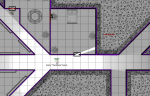
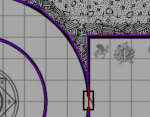
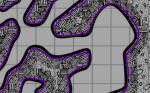
View attachment 1298
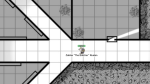
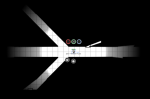
I had to draw the purple lines to setup the dynamic lighting. The red line are separate lines I can remove to represent opening doors. It took me a 1/2 hour to setup the entire map.
Assuming you have the same capabilities with Roll20 as I have with MapTool, it can save time to (1) block the whole area as vision-blocking (that is, the whole area is purple); (2) delete the vision-blocking purple area from rooms and corridors; (3) draw any vision blocking lines that were erased in step 2. Since drawing lines is fiddly, this means you only have to draw lines for internal walls, not external walls.

I think VBL lines are straight because there is a ton of math involved in calculating what is visible, and doing that for curves would likely increase the calculations exponentially.

No more mapping shenanigans at either end of the D&D spectrum either. (no more correcting the players' interpretation of your descriptions/just doing it yourself. Or conversely, leaving the whole party in the dark if they refuse to transcribe the map (unless you want to re-fog-of-war the VTT as you go I guess?)). No more line of sight arguments. No more 'you're too far away to do that'. Everything is wysiwyg. It kills the imagination and some of the more imaginative approaches to encounters and leads to a video-gamey, dungeon-clearing style of play.

The onus of prep is easily doubled or tripled. Finding decent tokens is difficult (moreso now A THOUSANDFOLD CURSES AND CANCER-AIDS UPON THE FOUL MURDERER OF THE TROVE!!!) Robert made it seem a wiz to drop in a map, but it is very much not unless you size and crop it ahead of time. I also call bullshit (!) on setting up the lighting for an entire dungeon in 30 min. unless that process has somehow become automated since last I looked. Tracing lines is brutal around all but the most linear of geometry. And, prickass players expect gorgeous coloured maps like they're seeing in premade map-packs or top-of-the-line published adventures.

On the upside; once you're done, all the monsters are on the map (including randos over to the side) which can make dynamic combat easier. It's a lot easier to start moving groups in neighbouring rooms as a response to loud combats. It's also easy to rearrange/restock things if the PC's run away to rest/hide. I guess I tried to frame it as a bad thing above, but it really does cut back on rules disputes if everyone can see where everything is during a fight as well. Similarly, I complained about the asshat with 14 tabs open, but on the other hand, at least he showed up to the game? Absenteeism goes way down when you can almost always attend.

All in all, it becomes a crutch. And sometimes I miss the good old days sitting around the table; but hell, I'm on the other side of the world and half the guys live on the other side of town from each other now. There's no going back.
Yeah, you-don't-know-you-have-been-teleported style traps like in B1 are difficult to pull off if they require a rotation of the map, without making a whole 'nother map. So are passages that pass underneath each other on the same level; I either have to put them on different maps, or ensure that they are passages of the same width and at right angles to each other, and make a special token with VBL "walls" on two parallel edges, which I can rotate depending on which direction they are coming from.

I do restore the fog of war if they aren't mapping.

I have a bunch of blank, numbered tokens for when I am in a rush and don't have time to find a match. Google image searches are my friend, and MapTool has a good separate tool for making tokens easily, so this usually isn't an issue. The slow part for me is programming the token macros, as I am a bit perfectionist about making them run smoothly in play.

Having the whole dungeon level on the VTT makes order of battle very easy. It is easy to see who is likely to hear melee, and where monsters will retreat to or summon reinforcements from. Battles become very dynamic if you have multiple exits, and the melee can spill into corridors and the party has to consider cutting of lines of retreat/reinforcements.

I do sometimes play without a VTT, but I don't like it as much. I find VTTs add more than they subtract.

Considering the complexity of your maps I don't doubt that they take a while to set up dynamic lighting. Also, I no longer make gorgeous maps; if the players want to play more often they can suck it up and deal with plain, representative maps. Which I have come to prefer anyway, as the set dressing seemed to be distracting and increase players' tendency to obsess over trivia. Like, literal pixel-bitching.
 
Is it open on your phones or something?

nono. That would cost money, heh. Just a variation of the 'phoning it in' idiom. As in, 'the actor phoned in his performance from his chateau in Southern France'.

Gotta admit, I'm an artist and I still hate dicking around interminably with the polygon-line tool. In ALL software. Someday I will legitimize the purchase of my very own Cintiq (link may be localized) to myself. Someday...
 
16" with 4K resolution sounds more like it! I guess when you can zoom in, maybe it matters less. Thanks.
 
For anyone who is interested, CBC Radio just did a long segment on D&D and religion.
It was interesting, but I'll admit I don't agree much with the fella's world views about religion...or acting out fantasy. He's scholarly, but ultimately (despite being an academic studying religion), very dismissive of religion---at his core, a non-believer.

On the other hand, he is an avid D&D player, and totally dismissive of the satanic-panic criticisms. But let's be honest, who isn't these days?--it's mainly brought up to be used as a veiled attack on religion. But mainly it's the whole "my Paladin wouldn't put up with how my boss is treating me" (always goes hand-in-hand with that class!) that rubs me the wrong way, as usual. I guess ultimately I've always been a bit disgusted and frightened by people playing out their will-to-power over the world via fantasy games. Pride is the cardinal sin (if you believe in such things)---why indulge it? In fact, he does at some point in the interview argue in favor of such indulgences as a "release mechanism", while using the usual academic's mechanic of "so-and-so suggests that..." to cloak his own opinions.

D&D was never about that for me, nor those I played with.

...or, if it was, we were colossally inept in the execution! :p

Probably the best bit was learning about Tolkien's belief that when all seems lost, salvation arrives in an unexpected way. "The Eagles!"
 
Last edited:
It was interesting, but I'll admit I don't agree much with the fella's world views about religion...or acting out fantasy. He's scholarly, but ultimately (despite being an academic studying religion), very dismissive of religion---at his core, a non-believer.

On the other hand, he is an avid D&D player, and totally dismissive of the satanic-panic criticisms. But let's be honest, who isn't these days?--it's mainly brought up to be used as a veiled attack on religion. But mainly it's the whole "my Paladin wouldn't put up with how my boss is treating me" (always goes hand-in-hand with that class!) that rubs me the wrong way, as usual. I guess ultimately I've always been a bit disgusted and frightened by people playing out their will-to-power over the world via fantasy games. Pride is the cardinal sin (if you believe in such things)---why indulge it? In fact, he does at some point in the interview argue in favor of such indulgences as a "release mechanism", while using the usual academic's mechanic of "so-and-so suggests that..." to cloak his own opinions.

D&D was never about that for me, nor those I played with.

...or, if it was, we were colossally inept in the execution! :p

Probably the best bit was learning about Tolkien's belief that when all seems lost, salvation arrives in an unexpected way. "The Eagles!"
I don't get much fussed about what people want to get out of the game. I mean, there are a lot of reasons people profess to play sports as well, including a perception that it builds "character". leadership skills, or confidence, and a certain amount of vanity can get wrapped up in it (which is a pretty dominant American high school trope, I would say).

If some kid can learn not to be a doormat by trying it out first in an RPG, more power to him. Fake it until you make it, as they say.
 
The hex pieces and everything were way too gamified. It's hard to imagine it as an accurate predicter of real world events.
 
From what I gather from when I used to follow MilTwitter, I think they really build wargames that way for scenario simulation. With custom rules depending on the variable and equipment.

I noticed a notation on the hexes which showed when it was easier to move from one hex to another. Like the lines on the hex edges denoting which beaches were possible to land on. I like that, I'm going to adopt it as a slower-than-a-road-but-faster-than-most-cross-country notation.
 
A random thought I had, for making modules that can easily be dropped into a campaign. Make your area map no larger than 24 miles across - that is, no larger than the size of a single "large" hex, using the smallest scale in common use. And don't imply that there is unusual terrain extending beyond the boundaries of the map.

I say this because of how difficult I find it to integrate area maps into my campaign, where the area map takes several hexes, and I have to find a location with (for example) mountains on two sides, and large forests on the other two sides, without redrawing my campaign map.

Bryce talks a lot about usability at the table, but I have more trouble with usability in the campaign. For this quality, I think the old TSR modules are generally superior to OSR efforts. I can drop Hommlet into most of the nations in my campaign world - pretty much anywhere I want to start a campaign. I really struggle to find a home for most OSR efforts, although @Malrex's modules are often an exception).
 
A random thought I had, for making modules that can easily be dropped into a campaign. Make your area map no larger than 24 miles across - that is, no larger than the size of a single "large" hex, using the smallest scale in common use. And don't imply that there is unusual terrain extending beyond the boundaries of the map.

I say this because of how difficult I find it to integrate area maps into my campaign, where the area map takes several hexes, and I have to find a location with (for example) mountains on two sides, and large forests on the other two sides, without redrawing my campaign map.

Bryce talks a lot about usability at the table, but I have more trouble with usability in the campaign. For this quality, I think the old TSR modules are generally superior to OSR efforts. I can drop Hommlet into most of the nations in my campaign world - pretty much anywhere I want to start a campaign. I really struggle to find a home for most OSR efforts, although @Malrex's modules are often an exception).
Thanks Beoric!

I just stumbled upon a video about 'how long should an adventure be?' The dude, Matthew Colville? was saying that adventures should be short, and not the big ones....and that he was surprised that most people on his twitch were just used to adventures being the big, hard bound books that Wizards was pumping out. He said it leads to a campaign fizzling because the adventures are so long, players forget what or why they are doing something and he believed the TSR modules were superiour because they were short and players could accomplish something. Anyways, sorta reminded me when Beoric is basically saying 'how big of an area should an adventure be.'
I like the smaller areas...like a valley or canyon or something that has a natural barrier. As a kid, I was used to lumping short adventures into a bigger campaign, but I guess that isn't done with the newer players because they are just used to the big adventures. Found it interesting to watch.

Anyways, I agree with Beoric about the TSR modules. There are some adventures out there that people think are great....and I admit they are creative, but I always scratch my head and wonder where the heck would I place it in my campaign? Even Palace of Unquiet Repose is a bit of a struggle as all the gods are dead, etc. but I think it doesn't delve into that too much and can be tweaked pretty easily.
 
For this quality, I think the old TSR modules are generally superior to OSR efforts.

lol, try jamming the massive wilderness areas in S4 and WG4 into your own world! Previous to my heartbreaker, I built a massive hexcrawl, sandbox island roughly the size of Britain with the purpose of jamming all my favourite printed adventures into it and letting the characters drive their own campaign. What I ended up doing in a lot of cases was shrinking the scale of the Wilderness portions (old adventures loooove to use giant 12+ mi hexes). In almost all cases the trek would be just as much fun at 1/6 the scale, and will fit neatly into the appropriate generic biome with a minimum of alteration.

In cases where the whole point is that the players must trek across 200 grueling miles of tundra to save the horse clans or whatever, you can usually break the map into pieces and distribute the Points (A, B, etc.) at appropriate distances in your own world map.

Like Malrex said, that leaves the real problem with all of these, which is adaptation. Old Greyhawk adventures were set in a generic, earthlike, magical medieval world, so they transfer easily to most campaigns. Later adventures start introducing world-specific crunch that can be very difficult to transplant without significantly altering your campaign world.

I guess I'm feeling defensive (due to the ridiculous size of my own work), but as a consumer, I LOVE getting a big book with a ton of usable content, lush artwork, and professional layout/design. I've definitely seen people shitting on 100+ page adventures in the comments section of Bryce's reviews, but (possibly unfairly?) written them off as miserable old bastards. Now I'm actually curious though, what's selling more successfully at the moment; short and sweet or long and delicious?
 
lol, try jamming the massive wilderness areas in S4 and WG4 into your own world! Previous to my heartbreaker, I built a massive hexcrawl, sandbox island roughly the size of Britain with the purpose of jamming all my favourite printed adventures into it and letting the characters drive their own campaign. What I ended up doing in a lot of cases was shrinking the scale of the Wilderness portions (old adventures loooove to use giant 12+ mi hexes). In almost all cases the trek would be just as much fun at 1/6 the scale, and will fit neatly into the appropriate generic biome with a minimum of alteration.

In cases where the whole point is that the players must trek across 200 grueling miles of tundra to save the horse clans or whatever, you can usually break the map into pieces and distribute the Points (A, B, etc.) at appropriate distances in your own world map.

Like Malrex said, that leaves the real problem with all of these, which is adaptation. Old Greyhawk adventures were set in a generic, earthlike, magical medieval world, so they transfer easily to most campaigns. Later adventures start introducing world-specific crunch that can be very difficult to transplant without significantly altering your campaign world.

I guess I'm feeling defensive (due to the ridiculous size of my own work), but as a consumer, I LOVE getting a big book with a ton of usable content, lush artwork, and professional layout/design. I've definitely seen people shitting on 100+ page adventures in the comments section of Bryce's reviews, but (possibly unfairly?) written them off as miserable old bastards. Now I'm actually curious though, what's selling more successfully at the moment; short and sweet or long and delicious?

The relevant portion of both S4's and WG4's area maps are all mountains. I don't have difficulty finding a big area of mountains where I can drop them. The scale is a bit big, but there is no time crunch for the wilderness portion, so the scale can be changed; also, 0e/1e/Basic overland travel speeds are always unrealistically fast, so it often doesn't make a big difference when I use my own travelling rules. I usually change the scale on the B1 overland map as well, to make it bigger.

(BTW @Malrex, I often have to change the scale on your area maps and detail maps for them to make sense. I assume you play TotM style?)

I agree with your adaptation comment. I would really like to figure out a way to use Palace of Unquiet Repose, but a lot of its elements are very specific and difficult to translate to my game world without a lot of work. Same goes for a lot of the NAP stuff; it's great, but I will never even try to use use most of it.

I expect you like hardbacks because, IIRC, you like reading modules. I only read them for the purposes of preparing to use them, and get frustrated with walls of text.

I find both hardback and softback books difficult to use for my purposes. The TSR modules, with physically separated (or separatable) maps and separate illustration booklets, were easier to work with. ATM I prefer PDFs, which I print in sections, generally one section with the text and key, and another reference section with maps, new monsters, new magic items, etc. Each section is "bound" with a staple in the corner, unless it is too big for that, in which case I have a Cerlox binder. I can write all over them, and if I want to use them in a different way in a different context I can just reprint them and make different notes. I dislike writing in bound books.
 
Status
Not open for further replies.
Back
Top